


About Sogoo

Encounter Authentic Japan
Through Beauty, Skill, and Spirit
Refined by a Long History
About Sogoo


Kyoto is home to countless treasures — stunning nature, traditional festivals, shrines and temples, historic streets, and exquisite cuisine.
But there’s more to discover — experiences that even those living in Kyoto rarely encounter.
Among them are the traditional performing arts and martial arts. Within them lies the beauty, skill, and spirit of Japan. We created this space so you could experience it, even in just a short amount of time.
This is Sogoo, a place dedicated to traditional Japanese cultural experiences. Through the performing arts and martial arts, feel the beauty, skill, and spirit refined by Japan’s long history. In this unexpected encounter, you’re sure to find something truly authentic.
Experience Japanese Arts & Martial Arts in the Heart of Kyoto
Just a 3-minute walk from Kyoto City Hall, in the heart of the city where the Gion Festival floats parade. Conveniently located near Kyoto Imperial Palace, Nijo Castle, Yasaka Shrine, and Fushimi Inari — stop by while sightseeing, shopping, dining, or on your way back to your hotel.
Nearby Attractions
Combine our experience programs with your sightseeing itinerary.

Nishiki Market
Known as “Kyoto’s Kitchen,” this lively market street is lined with fresh ingredients and local Kyoto flavors.

Kyoto Imperial Palace
Located in one of the world’s great historic cities, the Kyoto Imperial Palace preserves over a thousand years of court culture — its architecture, screen paintings, furnishings, and gardens.

Yasaka Shrine
A historic shrine famous for the Gion Festival, located at the entrance to Gion. The grounds are open 24 hours a day.

Nijo Castle
A UNESCO World Heritage Site, this magnificent castle showcases the authority of the Edo Shogunate and is famous for its “nightingale floors” that chirp underfoot.

Shin-Kyogoku Shopping Street
One of Kyoto’s largest covered arcades, with around 200 shops offering souvenirs and a wide variety of local food.

Fushimi Inari Taisha
Famous for its thousands of vermilion torii gates forming a dreamlike path up the mountain — one of Kyoto’s most iconic sights.

Kiyomizu-dera
A UNESCO World Heritage Site famous for the “Kiyomizu Stage,” this temple offers views of the Otowa Waterfall and the city of Kyoto spread out below.

Kinkaku-ji
Formally known as Rokuon-ji, this iconic World Heritage Site features a gold-leaf-covered pavilion reflected in Kyoko-chi Pond — one of Kyoto’s most recognizable landmarks.

Arashiyama
One of Kyoto’s most celebrated scenic areas, known for the Togetsukyo Bridge and the Bamboo Grove path, with beautiful views throughout every season.

Ginkaku-ji
Formally known as Jisho-ji, this World Heritage Site embodies the aesthetic of wabi-sabi, with a striking white sand garden as one of its highlights.

Gion & Hanamikoji
A quintessentially Kyoto geisha district lined with teahouses along its stone-paved streets — if you’re lucky, you might even spot a maiko.

Heian Shrine
A striking shrine marked by its vermilion torii gate and main hall, with a vast garden that offers seasonal flowers throughout the year.

To-ji
A World Heritage Site home to Kyoto’s iconic five-story pagoda, its lecture hall houses a striking three-dimensional mandala of Buddhist statues.

Sanjusangen-do
A breathtaking National Treasure lined with 1,001 statues of the thousand-armed Kannon, housed within a hall stretching roughly 120 meters in length.

Nanzen-ji
A renowned temple known for its magnificent Sanmon gate and brick aqueduct, Suirokaku, along with beautifully landscaped Zen gardens.

Ryoan-ji
A World Heritage Site famous for its karesansui rock garden of 15 carefully arranged stones — a peaceful place to sit quietly and reflect.
Cultural Experiences with World-Class Instructors
The instructors at Sogoo are award-winning artists with extensive international performance experience — some have even appeared in Hollywood films. They represent the highest level of authenticity in their respective art forms.
-
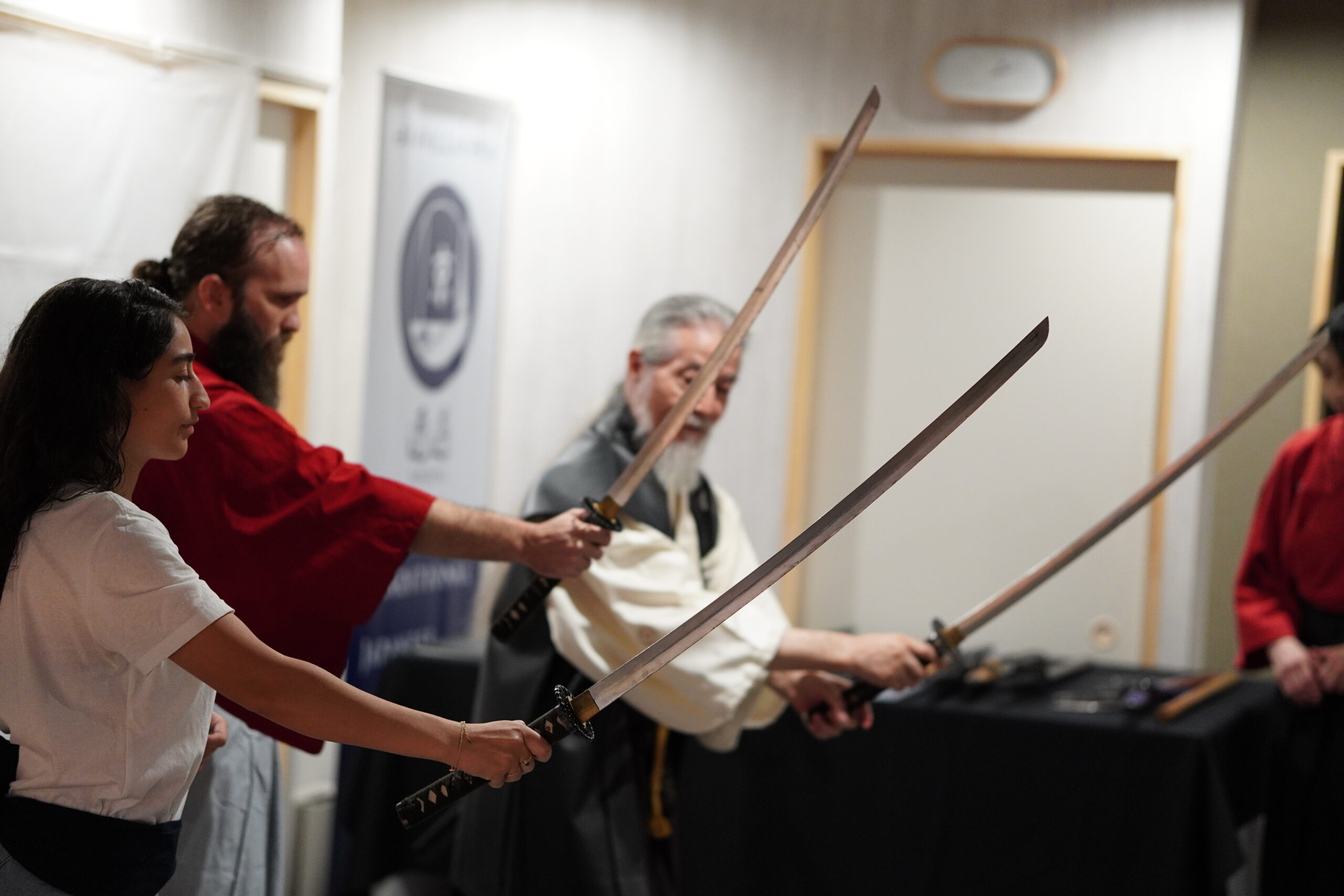
Samurai Sword Experience
The battlefield arts, refined into a path of spiritual discipline
リー村山先生
His areas of expertise include battōdō, iaidō, karate, Chinese martial arts, Ryukyu kobudō, tate (stage combat choreography), horseback riding, Japanese dance, and Western dance. He has appeared in numerous films, stage productions, and television dramas, including The Last Samurai. For the Takarazuka Revue, he has choreographed stage combat and dance sequences. He has also been invited to perform martial arts demonstrations in countries including Romania, China, and Vietnam.
-
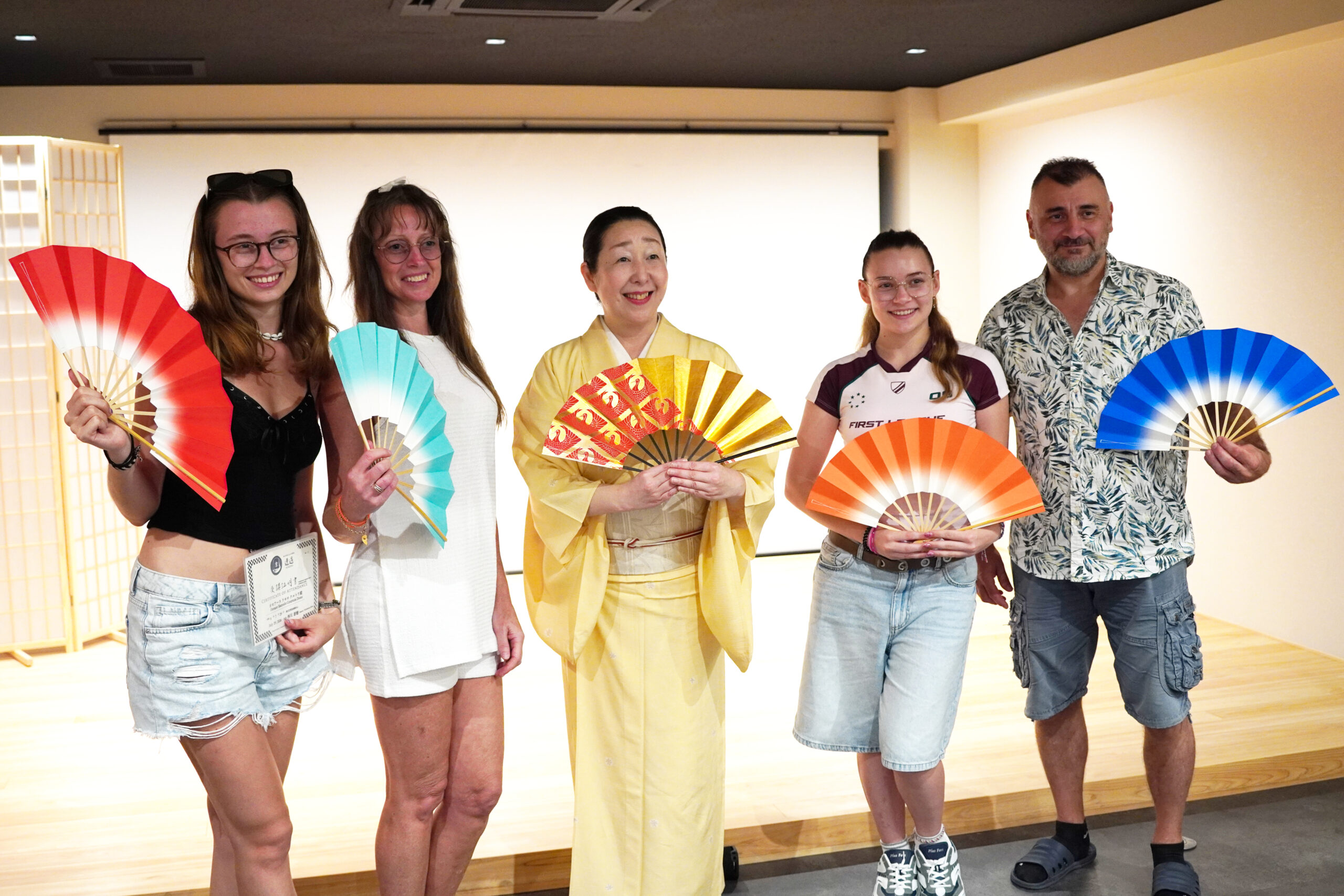
Japanese Dance
Physical expression woven from mai, odori, and furi — the three elements of Japanese dance
西川影戀先生
A licensed instructor of the Nishikawa school of Japanese dance and a visiting lecturer at Doshisha University. She is also an associate professor of the Omotesenke school of tea ceremony and directs the Nishikawa Eiren School of Japanese Dance, with locations in Kyoto, Hyogo, Osaka, and Tokyo. She serves as the representative of Ren, an organization dedicated to promoting Japanese culture. She teaches at educational institutions both in Japan and abroad, and has held numerous performances incorporating Japanese dance throughout Europe.
-

Traditional Music (Shakuhachi)
Wavering tones, subtle rasps, and silence elevated into beauty
三好芫山先生
He began playing the shakuhachi in early childhood and, at the age of 39, attained Chikurinken, the highest rank in the shakuhachi world. He has performed alongside pop and jazz artists and, at the request of Japan's Ministry of Foreign Affairs, has toured extensively abroad, making major contributions to introducing Japanese culture internationally. He is one of Japan's leading shakuhachi performers.
-

Noh Theater
A 650-year tradition that draws out the deepest truths of the human condition
小笠原由祠先生
A Noh performer of the Izumi school of Kyogen and a holder of the Comprehensive Designation for Important Intangible Cultural Properties. He studied under Nomura Man (the first, a Living National Treasure) and Nomura Mansaku IX. He serves as the representative of the Man-Kyogen Kansai Branch and is also a maker of Noh masks. He hosts the annual Noh performance "En'nen no Kai" in Paris, Kyoto, and Tokyo each year. While performing extensively around the world, he also provides acting guidance for domestic television dramas.
-

Traditional Music (Koto)
Wavering tones, subtle rasps, and silence elevated into beauty
三好晃子先生
A performer of Ikuta-school koto and sangen (three-stringed shamisen), as well as Kyo-ryu Yanagawa-school shamisen. Her grandmother was Miyoshi Atsuko (Ikuta-school, Kyoto branch), and her father was Miyoshi Gensan, a Grand Master of the Tozan-school shakuhachi. She began studying music from an early age and has taught at educational institutions while performing extensively abroad.